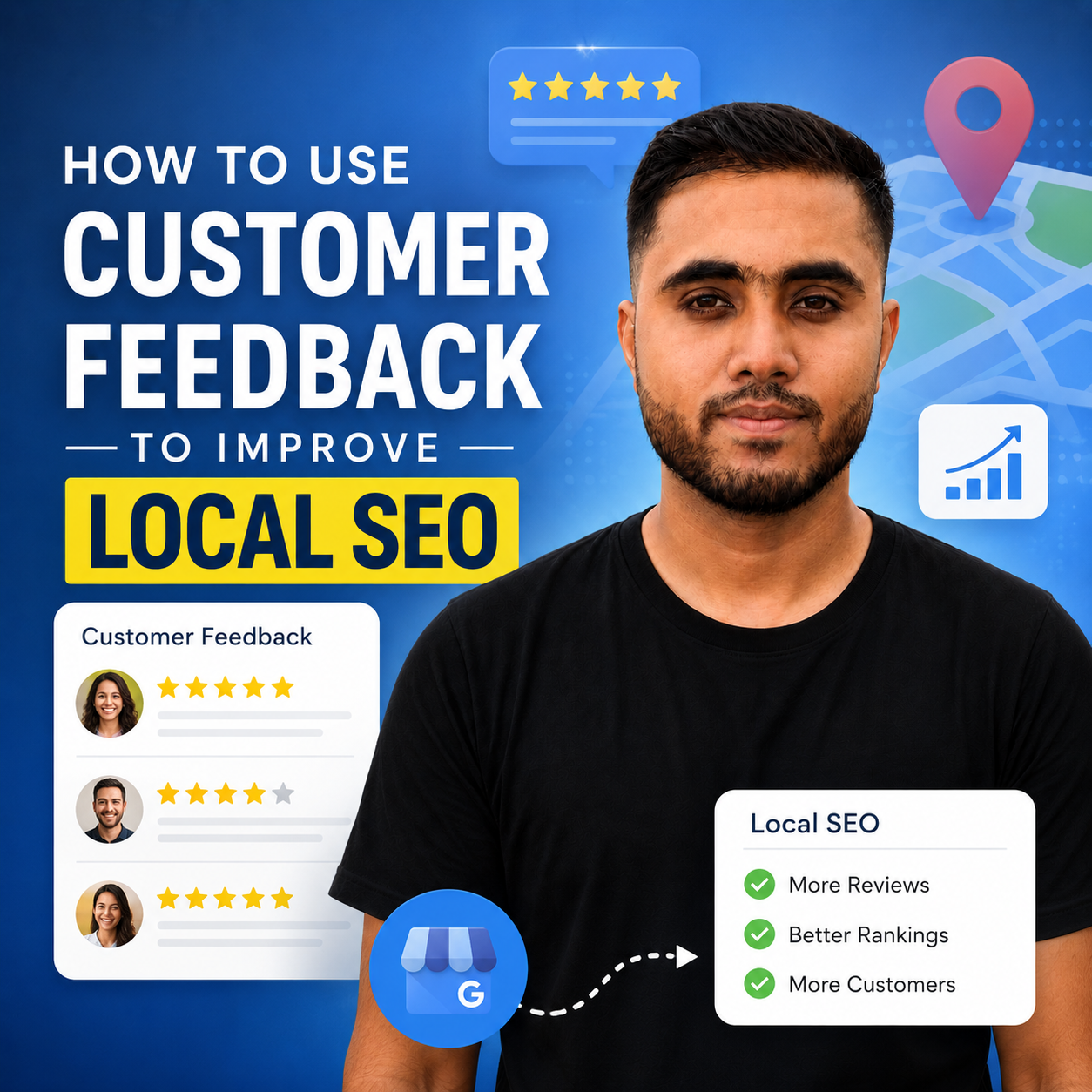
How to Use Customer Feedback to Improve Local SEO and Rank Higher in Google
Customer feedback can improve local SEO by showing you what real people ask, what they care about, what problems they face, and which words they use before choosing a business. When you turn reviews, testimonials, calls, survey answers, and Google Business Profile questions into helpful website content, your business becomes easier for Google and local customers to understand.
For any SEO or marketing business, customer feedback is not just a reputation signal. It is a powerful source of keyword ideas, FAQ topics, service-page improvements, trust-building content, and local search insights. Shawon Kumar Diptao helps businesses use this feedback to create stronger SEO content, improve local visibility, and support main service pages with smart internal links.
What Customer Feedback Means for Local SEO
Customer feedback includes every message, review, question, complaint, and comment that comes from your customers. This may include Google reviews, website contact forms, phone call notes, email replies, social media comments, testimonials, and survey responses.
For local SEO, this feedback is valuable because it shows how customers naturally describe their needs. A business may describe its service as “local SEO strategy,” but a customer may say, “My business is not showing on Google,” or “I need more calls from local search.” These phrases are often better for long-tail SEO because they match real search behavior.
Customer feedback also helps improve relevance. If many people ask about Google rankings, review management, local leads, or Google Business Profile optimization, those topics should appear clearly on your website. This helps search engines understand what your business offers and helps customers feel confident that they are in the right place.
How to Use Customer Feedback to Improve Local SEO
The best way to use customer feedback to improve local SEO is to collect it, organize it, and turn it into useful content. Do not treat reviews and questions as separate from your SEO strategy. They should guide your website structure, blog topics, service pages, FAQs, and Google Business Profile updates.
Start by collecting feedback from every customer touchpoint. Review your Google reviews, website form submissions, sales calls, emails, live chat messages, and social media comments. Look for repeated phrases. If customers keep saying “not ranking on Google,” “need more local leads,” “Google Maps ranking,” or “SEO audit,” these are strong keyword signals.
Next, group the feedback into themes. You may find common topics such as pricing, trust, results, ranking problems, bad reviews, low website traffic, or unclear service information. Each theme can become a section on a service page or a separate blog post.
Then, use the exact customer language naturally in your content. For example, instead of only writing “We provide local SEO services,” you can write, “We help businesses that are not showing in local Google results improve their website, Google Business Profile, and review strategy.” This sounds more helpful and matches customer intent better.
Turn Reviews Into Keyword Ideas
Reviews are one of the best places to find local SEO keywords. They show what customers value after working with a business. If reviews mention clear communication, fast response, better rankings, local leads, honest SEO advice, or helpful reporting, those phrases can support your content.
For example, if a customer says, “Shawon helped my business rank higher on Google and get more local calls,” this feedback gives you several useful keyword ideas. You can create content around “rank higher on Google,” “get more local calls,” and “local SEO for small businesses.”
Do not copy reviews word for word into every page. Instead, use the message behind the review. Turn customer language into helpful headings, paragraphs, FAQs, and call-to-action sections. This keeps your content natural while still making it search-friendly.
Use Customer Questions to Build AEO-Ready FAQs
Answer Engine Optimization, or AEO, focuses on giving clear answers to specific questions. Customer feedback is perfect for this because customers often ask the same questions before they decide to contact a business.
Common questions may include:
- Why is my business not ranking on Google?
- Can reviews help my local SEO?
- How long does local SEO take?
- What affects Google Maps ranking?
- Do I need a Google Business Profile for local SEO?
Each of these questions can become an FAQ with a direct answer. The key is to answer the question in the first sentence. Then add a short explanation. This format is useful for readers and easier for search engines to understand.
For example:
Can customer feedback help my business rank higher in Google?
Yes, customer feedback can help your business rank higher by showing which services, questions, and trust signals matter most to local customers. You can use this feedback to improve service pages, FAQs, blog posts, and Google Business Profile content.
This type of answer is simple, helpful, and AEO-friendly.
Local Problems Customer Feedback Can Reveal
Customer feedback often reveals problems that are hurting your local SEO. One common issue is unclear service information. If customers keep asking whether you offer a specific service, your website may not explain that service clearly enough.
Another problem is weak trust content. Local customers often want proof before they contact a business. If your reviews mention great results, clear reports, or honest advice, those details should appear on your website. They help new visitors understand why your business is trustworthy.
Feedback can also reveal location-based search gaps. Customers may mention that they found you while searching from a nearby area, business district, or service region. Even if you do not want to target a specific city, you can still use this information to build service-area content.
For example, you can create sections about helping nearby businesses, local service providers, small business owners, or companies serving multiple local markets. This keeps the content GEO-focused without forcing city names.
GEO-Focused SEO Without Mentioning a City
You do not always need to mention a city to make content locally relevant. A business can still build local visibility by focusing on service areas, nearby communities, local search intent, and real customer needs.
Customer feedback can show which local situations matter most. For example, some businesses may struggle because they serve several areas but only have one main website page. Others may get word-of-mouth referrals but fail to appear in Google search. Some may have good reviews but no clear review strategy.
You can use these insights to create content for:
- Service-area businesses that need more local leads
- Small businesses trying to rank in Google Maps
- Companies that want more calls from nearby customers
- Businesses with strong reviews but weak website traffic
- Local brands that need better SEO content and internal links
This approach supports GEO ranking because it connects your content to local intent, even without naming a city.
Cost of Using Customer Feedback for Local SEO
Using customer feedback for local SEO can cost nothing at the start. You can manually review Google reviews, emails, calls, contact forms, and customer questions. This is a smart first step for any small business.
However, professional support may be needed when you want to turn feedback into a complete SEO strategy. A local SEO expert can review your feedback, map keywords, update service pages, create blog topics, write FAQs, improve internal links, and optimize your Google Business Profile.
The cost depends on several factors, including your competition level, number of services, website condition, content needs, and ranking goals. A simple feedback review may cost less than a full SEO campaign. A complete local SEO strategy with content, technical updates, and ongoing optimization will require a larger investment.
The most important point is that customer feedback should not be ignored. If your customers are already telling you what they need, that information can guide smarter SEO decisions.
Expert Checklist for Using Customer Feedback in Local SEO
Use this checklist to turn customer feedback into ranking opportunities:
Review your latest customer feedback.
Read your recent Google reviews, website messages, sales call notes, and email replies. Look for repeated words, questions, and pain points.
Find repeated service keywords.
Mark phrases like “local SEO,” “Google ranking,” “Google Business Profile,” “SEO audit,” “more leads,” or “website traffic.”
Update your service pages.
Add missing services, clearer explanations, stronger headings, and direct answers based on what customers ask most.
Create FAQ sections.
Turn common customer questions into short, helpful answers. Use question-based headings to support AEO.
Improve internal links.
Connect blog posts to your main service pages. For example, link readers to SEO and marketing services by Shawon Kumar Diptao when they are ready to get professional help.
Refresh your Google Business Profile.
Use customer feedback to improve your service list, business description, posts, photos, and review responses.
Track local SEO performance.
Monitor calls, form submissions, keyword rankings, website clicks, and Google Business Profile actions.
Prevention and Maintenance Tips for Long-Term Local SEO
Local SEO is not a one-time task. Customer behavior changes, competitors improve, and search results shift over time. That is why feedback should be reviewed regularly.
Check your customer feedback at least once a month. Look for new questions, new objections, and new service requests. If several people ask the same thing, your website should answer it.
Keep your blog content updated. If an older post no longer matches customer needs, refresh it with new examples, better answers, and stronger internal links.
Respond to reviews carefully. Avoid using the same copied reply for every review. A helpful review response should thank the customer, mention the service naturally, and show that your business listens.
Also, keep your Google Business Profile accurate. Your services, hours, description, photos, and updates should match what customers are actually searching for. A well-maintained profile supports trust and local visibility.
When to Call a Professional in Your Service Area
You should call a professional when customer feedback shows repeated SEO problems that you cannot fix with small edits.
For example, if customers say they had trouble finding your business online, your local visibility may need a full audit. If people visit your site but do not contact you, your content may not answer the right questions. If competitors appear above you in Google while having weaker services, your website, reviews, Google Business Profile, and local authority signals may need improvement.
You should also get professional help if you want to rank for long-tail questions, appear in Google AI Overviews, improve service pages, or build a content strategy from real customer feedback.
Shawon Kumar Diptao can help turn feedback into a practical local SEO plan. This includes keyword research, content planning, blog writing, internal linking, Google Business Profile improvement, and AEO-friendly FAQ content.
Why Choose Shawon Kumar Diptao for Local SEO
Shawon Kumar Diptao helps businesses use real customer feedback to build stronger local SEO strategies. Instead of guessing what people want, the process starts with what customers already say in reviews, messages, calls, and questions.
This makes the content more useful and more aligned with search intent. It also helps businesses create service pages and blog posts that support local ranking, trust, and lead generation.
With Shawon Kumar Diptao, customer feedback becomes more than a review management tool. It becomes a source of keyword ideas, content topics, FAQ answers, conversion improvements, and internal linking opportunities.
If your business wants to rank higher in Google, earn more trust, and turn customer insights into SEO growth, this feedback-first approach can help.
Improve Your Local SEO With Real Customer Feedback
Your customers are already giving you valuable SEO data. Every review, question, call, and message can reveal what people care about before they choose your business.
The next step is to turn that feedback into helpful content, stronger service pages, better FAQs, and smarter internal links.
If you want expert help, visit Shawon Kumar Diptao to improve your local SEO and build a strategy based on real customer behavior.
FAQs
How can customer feedback improve local SEO?
Customer feedback improves local SEO by showing the exact words, questions, and problems customers use when searching for a business. You can use this feedback to improve service pages, blog posts, FAQs, review responses, and Google Business Profile content.
Can Google reviews help my business rank higher?
Yes, Google reviews can support local SEO by improving trust and showing customer experience. Reviews can also reveal useful keywords and questions that help you create better website content.
What type of customer feedback is best for SEO?
The best customer feedback for SEO includes Google reviews, testimonials, sales call questions, website form messages, survey answers, complaints, and Google Business Profile questions. These sources show real search intent.
How often should I update my website using customer feedback?
You should review customer feedback at least once a month. If customers repeatedly ask the same question or mention the same service, update your website, FAQ section, or blog content.
When should I hire a local SEO professional?
You should hire a local SEO professional when your business is not ranking, your website is not generating leads, your Google Business Profile is weak, or you need a clear strategy to turn customer feedback into better rankings.