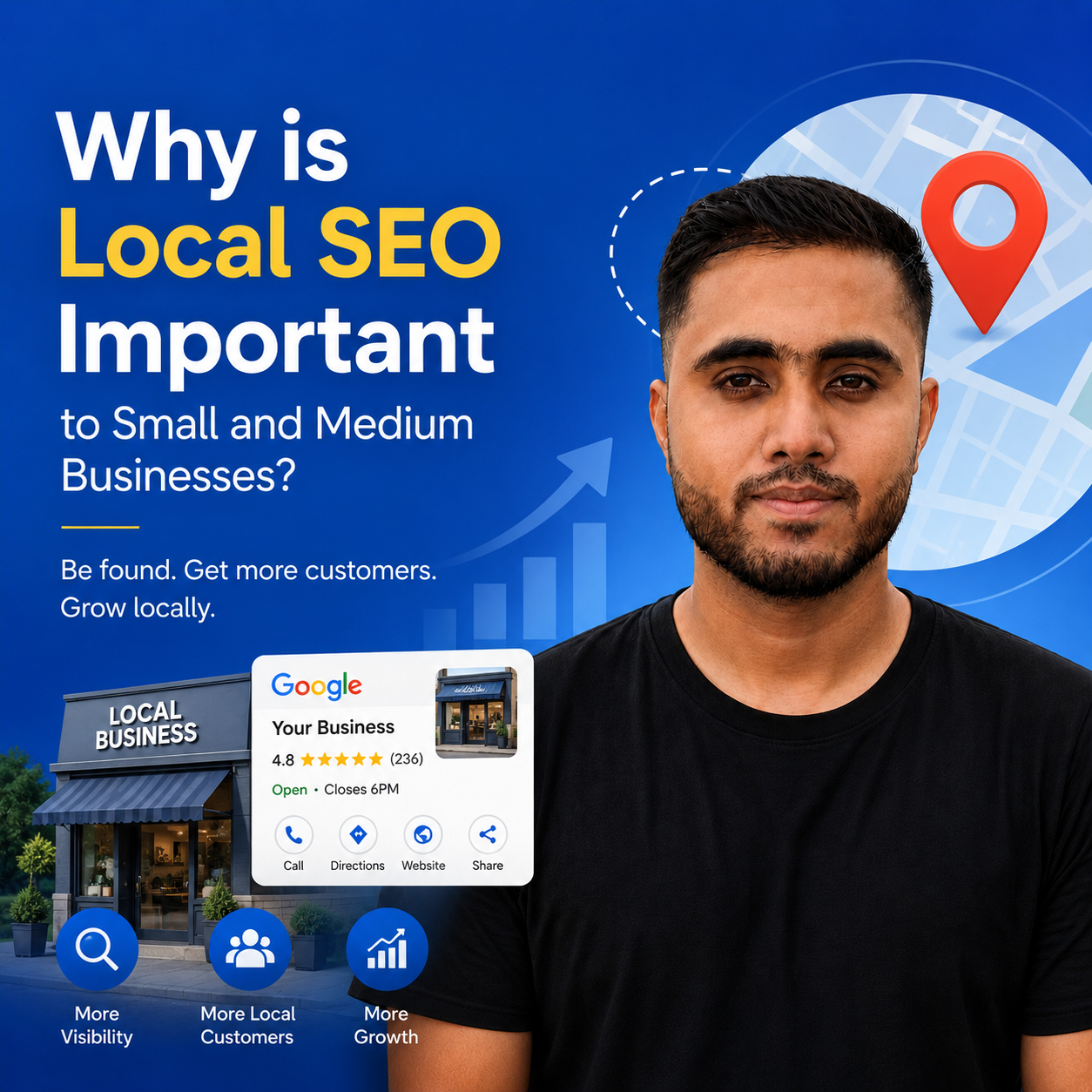
Why Is Local SEO Important to Small and Medium Businesses Trying to Rank on Google?
Local SEO is important to small and medium businesses because it helps them appear when nearby customers search on Google Search, Google Maps, and AI-powered search results. It improves visibility, trust, website traffic, calls, direction requests, and qualified leads from people already looking for local products or services.
| Local SEO Element | Why It Matters for Small Businesses |
|---|---|
| Google Business Profile | Helps your business appear in Search and Maps |
| Local keywords | Connects your services with nearby search intent |
| Reviews | Builds trust before customers contact you |
| Service pages | Helps Google understand what you offer |
| Internal links | Supports main SEO and marketing service pages |
| Fresh content | Helps answer long-tail and AEO-style questions |
For small and medium businesses, ranking on Google is not just about getting more clicks. It is about getting found by the right people at the right time. A customer searching for “SEO expert for small business,” “local SEO services,” or “how to rank my business on Google” is usually closer to taking action than someone casually browsing.
That is why local SEO should be part of every serious growth plan. It helps your business show up when customers are comparing options, reading reviews, checking service details, and deciding who to trust.
What Is Local SEO for Small and Medium Businesses?
Local SEO is the process of improving your online presence so customers in your target market can find your business on Google. It includes Google Business Profile optimization, local keyword research, service-page SEO, review management, technical SEO, citations, content marketing, and internal linking.
General SEO focuses on broad visibility. Local SEO focuses on visibility in a specific service area, nearby market, or customer location. For example, “SEO services” is broad. But “local SEO services for small businesses” or “why is local SEO important to small and medium businesses” is more specific and easier to match with real buyer intent.
Google says local results appear when people search for businesses or places near their location, and businesses can improve local visibility by keeping their Business Profile complete and accurate. Google also explains that local ranking is mainly based on relevance, distance, and prominence. (Google Help)
Why Is Local SEO Important to Small and Medium Businesses?
Local SEO is important because small and medium businesses often depend on local trust, local visibility, and local customers. A large brand may survive on national recognition. A smaller business usually needs to win attention in a specific market.
Local SEO helps you do that in several ways.
It improves your chance of appearing in Google Search and Google Maps. It helps customers understand your services. It builds trust through reviews and accurate business information. It also supports your main service pages by connecting helpful blog content to conversion-focused pages.
For example, a blog like this can support a main SEO service page by naturally linking to Shawon Kumar Diptao as a trusted SEO and marketing resource. This gives readers a next step while helping Google understand the relationship between educational content and service pages.
Local SEO also supports answer-based search. Google’s official guidance says SEO best practices still matter for generative AI features in Google Search, including AI Overviews and AI Mode. Google also states that AEO and GEO are still part of optimizing for the search experience, not separate shortcuts. (Google for Developers)
Local SEO Helps You Reach High-Intent Customers
The strongest benefit of local SEO is intent. People using local searches are often ready to compare, contact, book, visit, or buy.
A person searching “how to rank my small business on Google” has a clear problem. A person searching “local SEO services for small business” is likely looking for help. A person searching “Google Business Profile optimization” may already know they need a specific service.
This is where small businesses can win. You do not always need to outrank huge national websites for broad terms. You need to show up for the specific questions, service keywords, and local searches your real customers use.
That includes keywords such as:
- why is local seo important to small and medium businesses
- local SEO for small business
- local SEO services
- Google Business Profile optimization
- rank on Google
- SEO for small and medium businesses
- improve local search visibility
- Google AI Overviews SEO
When these keywords are used naturally in helpful content, they make your website easier for both people and search engines to understand.
Local SEO Builds Trust Before the First Conversation
Most customers do not contact a business blindly. They check reviews, search results, websites, photos, service details, and brand signals first.
BrightLocal’s 2026 Local Consumer Review Survey found that 97% of consumers read online reviews, and 41% always read reviews when browsing for businesses. That means your local reputation is often part of the buying journey before a customer calls, books, or fills out a form. (BrightLocal)
Google also recommends responding to reviews, adding photos and videos, keeping business hours updated, and verifying your Business Profile. These details help customers understand what you do, where you operate, and whether they can trust you. (Google Help)
For small and medium businesses, this matters because trust can close the gap between you and a bigger competitor. A smaller business with clear information, strong reviews, helpful content, and a professional website can look more reliable than a larger business with weak local signals.
The Main Local SEO Ranking Factors
Google’s local ranking system mainly uses relevance, distance, and prominence. Understanding these three factors helps you build a smarter SEO strategy.
Relevance
Relevance means how well your business matches what someone is searching for. If your website clearly explains your services, target customers, service area, and expertise, Google has more context.
For an SEO and marketing business, that means your pages should explain services like local SEO, keyword research, content strategy, on-page SEO, Google Business Profile optimization, technical SEO, and conversion-focused content.
Distance
Distance means how close your business or service area is to the searcher. Even if your blog does not mention a city, your website should still make your actual service areas clear where relevant.
For service businesses, this can include a contact page, service-area page, Google Business Profile service areas, and locally relevant examples.
Prominence
Prominence means how well-known and trusted your business appears online. Google says prominence can be based on information such as links, reviews, review count, and ratings. (Google Help)
This is why backlinks, citations, reviews, expert content, and brand mentions matter. They help Google and customers see your business as a credible option.
Common Local SEO Problems Small Businesses Face
Many small and medium businesses struggle with local SEO because their online presence is incomplete or unclear.
Some have a Google Business Profile, but it is not fully optimized. Others have a website, but the service pages are thin. Some publish blogs, but those blogs do not support their main service pages with internal links. Others use broad keywords but miss the long-tail searches customers actually type.
Common problems include:
- Incomplete Google Business Profile
- Missing service descriptions
- Weak or duplicate service pages
- No local keyword strategy
- Few customer reviews
- Inconsistent business information
- Slow website speed
- Poor mobile experience
- No internal linking plan
- Blog content with no conversion path
The biggest mistake is treating local SEO as a one-time setup. Local SEO is an ongoing system. It needs updates, tracking, content, reviews, and technical maintenance.
Cost of Local SEO for Small and Medium Businesses
The cost of local SEO depends on the size of your website, the number of services, competition level, content needs, technical issues, and whether you need monthly support.
A small business with a basic website may need foundational work first. That may include keyword research, Google Business Profile optimization, service-page updates, metadata improvements, internal links, and technical fixes.
A more competitive business may need deeper support. That can include ongoing content, competitor analysis, review strategy, local landing pages, conversion tracking, link building, and AEO-focused content for Google AI Overviews.
The cheapest option is not always the safest option. Low-quality SEO can create duplicate pages, keyword stuffing, spammy links, or thin content. These shortcuts can hurt trust and make your website look less useful.
A better way to judge local SEO cost is by return. Ask whether your SEO work is increasing qualified traffic, phone calls, form submissions, service-page visits, map visibility, and real leads.
GEO-Focused SEO Without Forcing a City
Because no specific city is required for this blog, the GEO strategy should focus on service-area relevance instead of fake location mentions.
A business can still build GEO strength by creating useful pages for real markets, nearby areas, neighborhoods, and service zones it actually serves. The goal is not to create low-value pages with only the location name changed. The goal is to create helpful local content that reflects real customer needs.
For example, a strong GEO-focused SEO strategy may include:
- A main local SEO service page
- A Google Business Profile connected to the website
- Service-area pages for real locations served
- Local FAQs based on customer questions
- Case studies from actual client projects
- Blog posts targeting long-tail search intent
- Internal links from blogs to main service pages
- Reviews that mention services and customer experience
This approach helps Google understand both what you do and where you can help customers.
Local SEO Maintenance and Prevention Tips
Local SEO needs regular care. If you ignore it, competitors can pass you, reviews can go unanswered, business details can become outdated, and old pages can lose performance.
Use this maintenance checklist:
- Update your Google Business Profile regularly
- Keep your phone, website, hours, and services accurate
- Add new photos when possible
- Respond to customer reviews
- Refresh old blog posts and service pages
- Fix broken links
- Improve slow-loading pages
- Add internal links to important service pages
- Track rankings, calls, forms, and organic traffic
- Review competitors every few months
Prevention is easier than recovery. It is better to maintain your local SEO every month than to wait until rankings drop.
When to Call a Local SEO Professional
You should call a local SEO professional when your website is not ranking, your competitors dominate Google Maps, or your content brings traffic but no leads.
You may also need professional help if your Google Business Profile is weak, your service pages are not converting, or your business does not appear for important keywords.
A local SEO professional can audit your website, identify ranking gaps, improve your content structure, optimize your Google Business Profile, and build a plan that connects blog content with service-page growth.
You should also get expert help if you want to appear in Google AI Overviews. Google’s guidance makes it clear that helpful content, clear technical structure, crawlability, and strong SEO foundations are still important for generative AI search visibility. (Google for Developers)
Why Choose Shawon Kumar Diptao for Local SEO?
Shawon Kumar Diptao helps small and medium businesses improve online visibility with practical SEO and marketing strategies. The focus is not just traffic. The focus is ranking for the right keywords, building helpful content, supporting main service pages, and turning visitors into leads.
A strong local SEO strategy should connect every part of your website. Blog posts should answer questions. Service pages should explain offers clearly. Internal links should guide users to the next step. Google Business Profile optimization should support local visibility. Technical SEO should make the site easier to crawl and use.
That is the kind of connected strategy small businesses need when they are trying to rank on Google.
To improve your local search visibility, visit Shawon Kumar Diptao and explore SEO and marketing support built around rankings, visibility, and real business growth.
CTA: Get Your Local SEO Plan
If your small or medium business is trying to rank on Google, now is the time to build a smarter local SEO strategy. Start with your Google Business Profile, improve your service pages, publish helpful content, and connect your blogs to your main service pages with strong internal links.
Need expert help?
Visit Shawon Kumar Diptao to start improving your SEO visibility.
Local FAQs
Why is local SEO important to small and medium businesses?
Local SEO is important because it helps small and medium businesses appear when nearby customers search on Google. It improves visibility, trust, website visits, phone calls, and qualified leads.
How does local SEO help a business rank on Google?
Local SEO helps by improving relevance, distance, and prominence signals. This includes optimizing your Google Business Profile, website content, service pages, reviews, local citations, and internal links.
Can local SEO help with Google AI Overviews?
Yes. Local SEO can support AI search visibility when your content is helpful, crawlable, well-structured, and built around real user questions. Google says generative AI search still relies on core SEO best practices. (Google for Developers)
How long does local SEO take to work?
Local SEO usually takes time because rankings depend on competition, website quality, content, reviews, Google Business Profile strength, and technical SEO. Some profile improvements may help faster, while stronger organic growth often needs ongoing work.
Do small businesses need local SEO if they already run ads?
Yes. Ads can bring paid traffic, but local SEO builds long-term organic visibility. A strong local SEO strategy helps customers find your business through Google Search, Google Maps, and answer-based searches without depending only on paid campaigns.