How to Do Local SEO for Multiple Locations: A Step-by-Step Guide for Growing Businesses
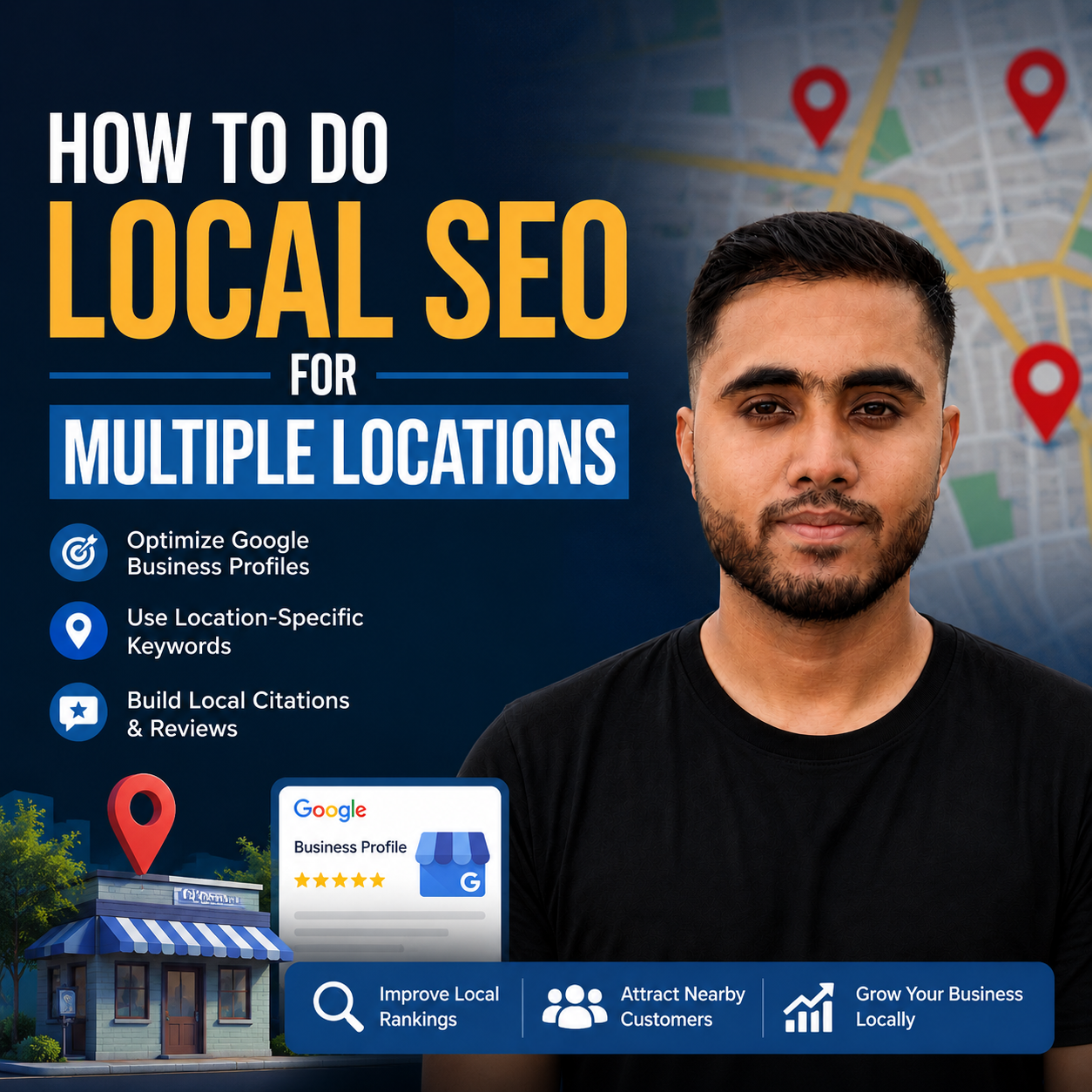
If you want to know how to do local SEO for multiple locations, the direct answer is this: create a separate local SEO system for every location your business serves. Each location needs its own optimized page, Google Business Profile strategy, local content, reviews, citations, internal links, and tracking.
Multi-location local SEO is different from regular SEO. You are not trying to rank one page in one area. You are trying to help Google understand that your business is relevant, trusted, and active in several locations. That means your website, business profiles, content, and reputation signals must all work together.
For growing businesses, this is one of the best ways to increase local visibility, rank for long-tail questions, appear in Google Maps, support main service pages, and prepare for Google AI Overviews.
If you need professional SEO and marketing support, you can work with Shawon Kumar Diptao to build a smarter local growth strategy.
What Is Multi-Location Local SEO?
Multi-location local SEO is the process of optimizing your online presence so each branch, office, service area, or target location can rank in local search results.
For example, a business may serve several cities, nearby towns, suburbs, or service zones. If the website only has one general service page, Google may not clearly understand where the business operates. Customers may also struggle to find the right location, service, or contact information.
A strong multi-location local SEO strategy solves this problem by giving every important location its own search visibility plan.
This usually includes:
- A dedicated page for each location
- Optimized Google Business Profiles
- Consistent name, address, and phone number details
- Local reviews for each branch
- Service-specific content
- Internal links to main service pages
- Local backlinks and citations
- Clear tracking for calls, clicks, leads, and rankings
The goal is simple. Each location should have enough trust, relevance, and local proof to rank for searches in that area.
Why Multi-Location Businesses Need a Different SEO Strategy
A single-location business can focus on one main area. A multi-location business needs to manage several local search ecosystems at the same time.
Each location may have different competitors, customer behavior, search demand, reviews, and ranking challenges. One location may rank well in Google Maps, while another may not appear at all. This often happens when businesses use the same website content and same SEO strategy for every location.
That approach does not work well.
Google wants to show helpful, relevant, and trustworthy results. If your location pages look copied, thin, or generic, they may not perform. If your Google Business Profiles are incomplete or inconsistent, customers may not trust them. If your reviews are strong for one location but weak for another, your visibility can vary from market to market.
This is why multi-location SEO needs structure. You need one brand strategy, but each location should have its own local signals.
Step 1: Build a Strong SEO Foundation First
Before creating multiple location pages, make sure your website is ready. A weak website structure can hold back every page you publish.
Start with a full SEO audit. Check whether your website is easy for Google to crawl, index, and understand. Your main services should be clear. Your contact page should be easy to find. Your navigation should make sense for users and search engines.
A good multi-location website structure may look like this:
- Homepage
- Main service pages
- Location pages
- Blog posts
- About page
- Contact page
Your homepage should explain who you are and what you do. Your main service pages should target your core services. Your location pages should support those services in each target area. Your blog should answer common customer questions and strengthen topical authority.
Also check technical SEO issues such as:
- Slow page speed
- Broken links
- Missing title tags
- Duplicate meta descriptions
- Poor mobile layout
- Indexing problems
- Weak internal linking
- Missing schema markup
- Thin or copied pages
Set up Google Search Console and Google Analytics 4 so you can track performance. You should know which pages are getting impressions, clicks, calls, form fills, and conversions.
Without tracking, you are guessing. With tracking, you can improve each location based on real data.
Step 2: Create Dedicated Location Pages
Dedicated location pages are one of the most important parts of how to do local SEO for multiple locations.
Each real business location or major service area should have its own page. This page should not be a copy of another page with only the location name changed. It should provide useful, local, and specific information.
A strong location page should include:
- Location-focused H1 heading
- Unique introduction
- Services available in that area
- Local customer problems
- Local proof or examples
- Reviews or testimonials
- Contact details
- Business hours if relevant
- Photos if available
- FAQs
- Clear call-to-action
- Internal links to main service pages
For example, if you offer SEO and marketing services in multiple areas, each location page can explain the local search challenges businesses face in that market. One area may have strong competition in Google Maps. Another may have many small businesses with weak websites. Another may need better review management or service page optimization.
This makes each page more helpful and more unique.
Step 3: Avoid Duplicate Location Content
One of the biggest mistakes in multi-location SEO is duplicate content.
Many businesses create 10 location pages using the same content and simply change the location name. This may save time, but it usually creates weak pages.
Instead, make every page useful on its own.
You can make location pages unique by adding:
- Different local examples
- Different FAQs
- Different service highlights
- Different customer pain points
- Different testimonials
- Different nearby service area mentions
- Different calls-to-action
- Different images or team details
For example, instead of writing:
“We provide local SEO services in this area.”
Write something more specific:
“Many growing businesses struggle to rank across multiple service areas because their website has one general service page and no clear location strategy. Our local SEO process helps each target location build stronger visibility through optimized pages, Google Business Profile improvements, review signals, and local content.”
This version is more helpful. It gives context. It also supports AEO because it answers a real problem clearly.
Step 4: Optimize Google Business Profiles for Each Location
Your Google Business Profile is one of the strongest local SEO assets for each location. If your business has multiple physical locations, each eligible location should have its own profile.
Each profile should include:
- Correct business name
- Accurate address
- Local phone number
- Website link
- Business hours
- Primary category
- Secondary categories
- Services
- Photos
- Business description
- Updates or posts
- Reviews
- Questions and answers
Make sure your business information is consistent across your website, Google Business Profile, directories, and social profiles. Inconsistent details can confuse both Google and customers.
You should also connect the right website page to the right profile. Do not send every profile to the homepage if you have dedicated location pages. Link each profile to the matching location page when possible.
This helps Google connect the location, page, services, and local search intent.
Step 5: Use GEO-Focused Content for Nearby Areas
Even if you do not want to mention one specific city, your content can still be GEO-focused. GEO-focused content means your pages and blog posts are written around real local search behavior.
For multi-location businesses, this can include:
- Service area pages
- Nearby area sections
- Local comparison posts
- Google Maps ranking guides
- Local SEO troubleshooting articles
- Location page optimization guides
- Review strategy content
- Google Business Profile content
For example, a blog post can answer questions like:
- Why is one business location ranking but another is not?
- How many location pages does a growing business need?
- How do you optimize Google Business Profiles for multiple locations?
- How do you avoid duplicate content across location pages?
- How do you rank for local searches in nearby areas?
These questions are excellent for AEO because they match how people search in Google and AI-powered results.
AEO-ready content should provide short, direct answers first. Then it should explain the answer in more detail. This helps both readers and search engines understand the page quickly.
Step 6: Add Local Proof to Every Location Page
Local proof helps build trust.
A location page without proof can feel generic. A page with reviews, photos, examples, and local details feels more real.
You can add local proof with:
- Customer reviews
- Case studies
- Project examples
- Local team information
- Photos from the area
- Local business problems
- Service-specific results
- Testimonials
- Local FAQs
For an SEO and marketing business, local proof could include a short example like this:
“A growing service business had multiple target areas but only one general service page. After creating separate location pages, improving internal links, and optimizing Google Business Profile details, the business started receiving more local impressions and better-qualified leads.”
Keep examples honest and realistic. Do not make fake claims or promise guaranteed rankings. Local SEO works best when it is built on trust, consistency, and useful execution.
Step 7: Build Local Citations and Consistent NAP Details
NAP means name, address, and phone number. For multi-location businesses, NAP consistency is very important.
Each location should have accurate information across directories, maps, industry websites, local listings, and social profiles.
Common citation platforms may include business directories, local chambers, industry directories, review platforms, map listings, and social profiles.
The key is consistency.
Avoid these problems:
- Different phone numbers for the same location
- Old addresses still appearing online
- Wrong business hours
- Duplicate listings
- Missing website links
- Different business names across platforms
Citation cleanup may not feel exciting, but it supports local trust. It also helps customers contact the right location without confusion.
Step 8: Create a Review Strategy for Each Location
Reviews are powerful for multi-location local SEO. But reviews should be managed by location, not only at the brand level.
Each location needs its own review growth plan. A strong review strategy includes asking happy customers for feedback, responding to reviews, and using reviews to improve service quality.
Do not collect all reviews under one location if customers worked with another branch. That creates an uneven reputation profile. One location may look strong while others look inactive.
When responding to reviews, keep your replies natural and helpful. Mention the service when appropriate. Add local context when it makes sense. Thank the customer and show that your business cares.
A good response can improve trust for future customers who read your profile before calling.
How Much Does Local SEO for Multiple Locations Cost?
The cost of local SEO for multiple locations depends on the size of your business, number of locations, competition level, content needs, technical SEO issues, and monthly management requirements.
A business with two locations will usually need a smaller plan than a business with 25 locations. A business in a competitive industry may also need more content, stronger backlinks, and deeper Google Business Profile optimization.
Common cost factors include:
- Website audit
- Technical SEO fixes
- Location page creation
- Google Business Profile optimization
- Citation cleanup
- Review strategy
- Blog content
- Internal linking
- Tracking and reporting
- Ongoing monthly improvements
The important thing is to avoid cheap, copied location pages. Low-quality pages may not rank and can weaken your website. A better investment is a structured SEO plan that builds long-term visibility.
Prevention and Maintenance Tips for Multi-Location SEO
Multi-location SEO needs regular maintenance. You cannot create location pages once and forget about them.
Search results change. Competitors improve their websites. Reviews grow or slow down. Business hours change. Services change. Google updates its systems. Your SEO strategy should stay active.
Use this monthly maintenance checklist:
- Check Google Search Console performance
- Review local rankings
- Update location pages
- Add fresh internal links
- Respond to new reviews
- Check Google Business Profile details
- Add new photos or updates
- Fix broken links
- Refresh old blog content
- Review lead quality by location
Also watch for warning signs.
You may need to improve your strategy if:
- One location ranks but others do not
- Location pages are not indexed
- Google Business Profiles have incorrect details
- Organic traffic is dropping
- Calls or form leads are declining
- Pages have duplicate content
- Customers contact the wrong branch
Regular maintenance protects your rankings and helps every location grow stronger over time.
When to Call a Multi-Location SEO Professional
You should call a multi-location SEO professional when your business is growing but your online visibility is not keeping up.
This is especially important if you have several locations, but only one location gets most of the traffic. It may also be time to get help if your website has copied location pages, weak Google Business Profiles, poor internal links, or inconsistent citations.
A professional can help with:
- Multi-location SEO audits
- Local keyword research
- Location page strategy
- Google Business Profile optimization
- AEO-ready blog content
- Internal linking plans
- Technical SEO fixes
- Tracking and reporting
- Local ranking improvement
If you want to rank in Google and improve visibility in Google AI Overviews, your content must be clear, helpful, structured, and trustworthy. A professional SEO strategy can help you build that foundation.
Why Choose Shawon Kumar Diptao for Multi-Location Local SEO?
Shawon Kumar Diptao helps businesses create SEO and marketing strategies that are practical, structured, and growth-focused.
For multi-location local SEO, the goal is not only to publish more pages. The goal is to build a complete system that helps each location earn visibility.
That system may include better service pages, stronger location pages, Google Business Profile improvements, helpful blog content, AEO-ready answers, internal linking, and clear reporting.
Shawon Kumar Diptao focuses on helping businesses improve local visibility, support main service pages, rank for long-tail searches, and build content that works for both customers and search engines.
If your business wants a smarter way to grow across multiple locations, visit Shawon Kumar Diptao and explore SEO and marketing support.
Final Thoughts
Learning how to do local SEO for multiple locations is essential for growing businesses. You need more than one homepage and a few city names. You need a clear strategy for every location you want to rank.
Start with a strong website foundation. Create unique location pages. Optimize Google Business Profiles. Build citations. Collect reviews. Write GEO-focused content. Add internal links. Track performance. Maintain everything each month.
When all of these parts work together, your business becomes easier to find, easier to trust, and easier to choose.
For expert SEO and marketing support, connect with Shawon Kumar Diptao and build a local SEO strategy designed for long-term growth.
FAQs About How to Do Local SEO for Multiple Locations
What is the best way to do local SEO for multiple locations?
The best way to do local SEO for multiple locations is to create a unique SEO strategy for each location. Each area should have its own optimized page, Google Business Profile, local content, reviews, citations, and tracking.
Do I need a separate page for every business location?
Yes. If your business has real locations or major service areas, each one should usually have its own page. This helps Google understand where you operate and helps customers find the right local information.
How do I avoid duplicate content on location pages?
Avoid duplicate content by writing unique sections for each location. Add local customer problems, service details, reviews, examples, FAQs, and photos. Do not copy the same page and only change the location name.
How much does local SEO for multiple locations cost?
The cost depends on the number of locations, competition level, website condition, content needs, Google Business Profile work, and monthly SEO support. More locations usually require more strategy, content, and tracking.
Can local SEO help my business rank in Google AI Overviews?
Yes. Local SEO can support Google AI Overview visibility when your content gives clear answers, uses helpful headings, includes expert guidance, and provides trustworthy information. AEO-ready content improves your chances of being understood by search engines.