What Is the Difference Between Local and Organic SEO for Service-Based Businesses?
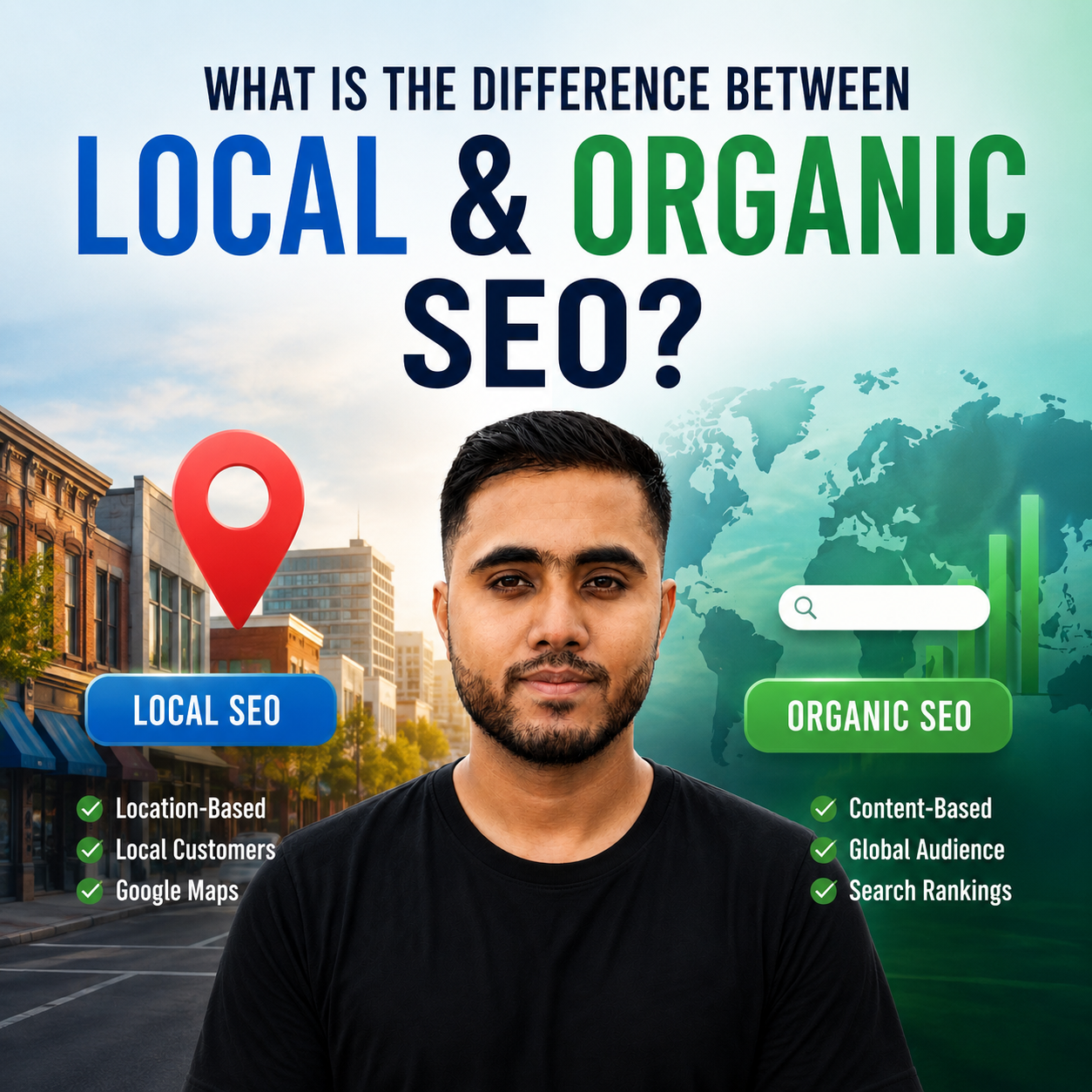
The main difference between local and organic SEO is simple: local SEO helps a service-based business appear for nearby, location-based searches, while organic SEO helps a website rank in regular Google search results for broader service and informational keywords. Local SEO is built for calls, map visibility, and service-area leads. Organic SEO is built for long-term traffic, trust, content authority, and website growth.
For service-based businesses, the best strategy is usually not choosing one over the other. The strongest results come when local SEO and organic SEO work together. One helps people find you when they are ready to hire. The other helps them trust you before they make a decision.
| SEO Type | Main Purpose | Best For | Example Search |
|---|---|---|---|
| Local SEO | Improve visibility in local search and Google Maps | Calls, bookings, quote requests, nearby leads | “SEO consultant near me” |
| Organic SEO | Improve website rankings in regular search results | Blog traffic, service pages, authority, education | “what is the difference between local and organic SEO” |
| Combined SEO | Build full search visibility | Service businesses that need leads and trust | “local SEO services for service-based businesses” |
If your business depends on appointments, inquiries, consultations, or service calls, you need to understand both. Local SEO gets you seen in your service area. Organic SEO makes your website stronger, more useful, and easier for Google to understand.
What Is Local SEO?
Local SEO is the process of optimizing your online presence so your business appears when people search for services in a specific area. This includes Google Maps, Google Business Profile, “near me” searches, local pack results, and service-area searches.
For example, someone may search:
- “SEO consultant near me”
- “local SEO expert for small business”
- “Google Business Profile optimization service”
- “marketing consultant for service businesses”
- “SEO services for local businesses”
These searches often come from people who are close to making a decision. They do not want a general article only. They want a provider, a quote, a phone number, a consultation, or a trusted expert.
For a service-based business, local SEO usually includes:
- Google Business Profile optimization
- Local keyword targeting
- Service-area content
- Review generation
- Local citations
- Business directory listings
- NAP consistency
- Location or service-area pages
- Locally relevant website content
- Internal links from blogs to service pages
The goal is to help Google understand what you do, where you serve customers, and why your business should appear for local searches.
What Is Organic SEO?
Organic SEO is the process of improving your website so it ranks in the normal, unpaid Google search results. These are the standard blue-link results, blog results, service pages, guides, FAQs, and other website pages that appear outside the map pack.
Organic SEO helps your business rank for educational, commercial, and service-related keywords. For example, the keyword “what is the difference between local and organic SEO” is an organic SEO keyword because the searcher wants an explanation.
Organic SEO usually includes:
- Service page optimization
- Blog writing
- Keyword research
- Technical SEO
- Internal linking
- On-page SEO
- Content structure
- Backlink building
- Schema markup
- Page speed improvements
- Helpful FAQ sections
For service-based businesses, organic SEO is powerful because customers often research before they contact a provider. They may want to understand pricing, compare services, check your expertise, or learn whether they actually need professional help.
A blog post can answer those questions and then guide readers to your service page through a relevant internal link, such as SEO strategy by Shawon Kumar Diptao.
What Is the Difference Between Local and Organic SEO?
The biggest difference between local and organic SEO is the type of search intent they target.
Local SEO targets people searching for a nearby provider. These people usually have high buying intent. They may be ready to call, book, visit, or request a quote.
Organic SEO targets people searching for answers, education, comparisons, and solutions. These people may not be ready to buy immediately, but they are moving through the decision-making process.
A local SEO search may be:
- “best SEO consultant near me”
- “Google Business Profile expert”
- “local SEO services for small businesses”
An organic SEO search may be:
- “what is the difference between local and organic SEO”
- “how does SEO help service businesses”
- “local SEO vs organic SEO”
- “how to improve website ranking on Google”
Local SEO is more focused on location and immediate action. Organic SEO is more focused on information, authority, and long-term visibility.
Why Service-Based Businesses Need Local SEO
Service-based businesses rely on trust and timing. When someone needs a service, they usually want a provider who is easy to find, easy to contact, and clearly relevant to their need.
Local SEO helps with that.
A strong local SEO strategy can help your business appear in:
- Google Maps
- Local pack results
- “Near me” searches
- Service-area searches
- Branded local searches
- Mobile searches
- Voice search results
This is especially important because many service customers compare businesses quickly. They may look at reviews, business hours, photos, services, and your website before making contact.
If your Google Business Profile is incomplete, your reviews are weak, or your website does not support your local relevance, competitors may appear before you.
That is why local SEO is not only about adding a city name to a page. It is about creating strong local trust signals across your entire online presence.
Why Service-Based Businesses Need Organic SEO
Organic SEO helps your business become a trusted source of information. It gives your website the depth needed to rank for more than just your business name or homepage.
For example, a marketing business may have service pages for:
- Local SEO services
- Organic SEO services
- Google Business Profile optimization
- SEO audits
- Content strategy
- Technical SEO
- Digital marketing consulting
But service pages alone may not answer every customer question. That is where blog content helps.
A blog can target long-tail keywords like:
- what is the difference between local and organic SEO
- how local SEO helps service businesses
- why my business is not ranking on Google
- how to improve Google Maps ranking
- how SEO brings leads for service businesses
These long-tail topics can support your main service pages through internal links. They can also help your site appear for question-based searches, featured snippets, and AI-generated search answers.
This is where AEO, or Answer Engine Optimization, becomes important. AEO means structuring content so search engines and AI systems can easily extract clear answers. That includes direct answers, short definitions, tables, FAQs, schema, and well-organized headings.
Local SEO vs Organic SEO: Which One Gets Faster Results?
Local SEO can often produce faster lead opportunities for service-based businesses because it targets people who are already looking for a nearby provider. If your Google Business Profile is weak or incomplete, improving it can sometimes create visible changes faster than building a large organic content library.
Organic SEO usually takes longer because it depends on website authority, content quality, technical health, keyword competition, and indexing. However, it can create more durable long-term growth.
Think of it this way:
Local SEO helps you show up when someone is ready to act.
Organic SEO helps you become the business they trust before they act.
A smart service business uses local SEO for demand capture and organic SEO for demand creation.
Common Local SEO Problems for Service Businesses
Many service-based businesses struggle with local SEO because their online presence is unclear or incomplete.
Common problems include:
- Google Business Profile has the wrong category
- Services are not fully listed
- Business hours are outdated
- Reviews are too few or too old
- The website does not mention service areas clearly
- Local citations have inconsistent information
- Service pages are thin
- No local proof or testimonials are shown
- Competitors have stronger content and reviews
Another common issue is weak website support. Your Google Business Profile may get clicks, but if users land on a poor website, they may leave without contacting you.
That is why local SEO and organic SEO should not be separated completely. Your local presence and your website need to support each other.
Common Organic SEO Problems for Service Businesses
Organic SEO problems are often connected to content, structure, and trust.
A service business may have a website, but the pages may not answer the right questions. The homepage may be too general. The service pages may be too short. The blog may not target buyer-intent or question-based keywords.
Common organic SEO problems include:
- No keyword strategy
- Weak service pages
- Duplicate content
- Poor internal linking
- Missing FAQs
- Slow website speed
- No schema markup
- Thin blog content
- No clear CTA
- No topical authority
For example, if your blog explains “what is the difference between local and organic SEO” but does not link to your SEO service page, you lose a chance to guide the reader. Internal linking helps users and search engines understand which pages matter most.
That is why your blog content should support your main service pages naturally.
Cost of Local SEO vs Organic SEO
The cost of local SEO and organic SEO depends on your market, competition, website condition, and goals.
Local SEO costs may depend on:
- Google Business Profile setup or cleanup
- Review strategy
- Local citation building
- Service-area page creation
- Competitor strength
- Local keyword tracking
- Website location signals
Organic SEO costs may depend on:
- Website audit needs
- Service page optimization
- Blog content creation
- Technical SEO fixes
- Backlink gap
- Content refresh work
- Keyword difficulty
If your business needs calls quickly, local SEO may be the first priority. If your website has weak content and no authority, organic SEO should also be included early.
The best option is often a phased SEO strategy. Start by fixing the most urgent local visibility issues. Then build stronger service pages and helpful blog content. Over time, the two channels support each other.
GEO Strategy for Service-Based Businesses Without a Primary City
Even if you do not want to mention one main city, your SEO still needs geographic relevance. GEO-focused SEO means showing where your business serves customers without forcing unnatural city names into every sentence.
For a service-area business, this can include:
- A clear service-area section
- Location signals on service pages
- Case studies from served areas
- Local testimonials
- Google Business Profile service areas
- Local directory listings
- Area-based FAQs
- Content that reflects local customer problems
The key is to avoid thin location pages. Do not copy the same page and only change the area name. That does not build trust.
A better approach is to create useful, specific pages. Each location or service-area page should explain the service, common local needs, customer pain points, proof, FAQs, and a clear CTA.
SEO Maintenance Tips for Better Rankings
SEO needs maintenance. Google changes. Competitors improve. Customer behavior shifts. Your website content can become outdated.
To protect local SEO rankings, you should:
- Keep your Google Business Profile updated
- Add fresh photos when possible
- Respond to reviews
- Check your phone number and website link
- Update services and business hours
- Monitor local rankings
- Keep citations consistent
To protect organic SEO rankings, you should:
- Refresh old blog posts
- Add new internal links
- Improve weak service pages
- Update outdated statistics
- Add FAQs
- Fix broken links
- Improve page speed
- Review search performance data
- Strengthen CTAs
SEO maintenance prevents slow ranking decay. It also helps your website stay useful for both people and search engines.
When to Call a Professional SEO Consultant
You should call a professional SEO consultant when you are not sure why your business is not ranking, why traffic is not converting, or which SEO strategy should come first.
Professional help is useful when:
- Your Google Business Profile is not visible
- Your competitors dominate local results
- Your service pages do not rank
- Your website gets traffic but no leads
- You are targeting the wrong keywords
- Your blog content is not supporting your services
- Your rankings dropped suddenly
- You want better visibility in Google AI Overviews
- You need a clear local and organic SEO roadmap
SEO involves more than adding keywords. A proper strategy looks at search intent, technical issues, content quality, local signals, internal links, user experience, and conversion paths.
For service-based businesses, this matters because rankings alone are not the final goal. The real goal is more qualified leads.
Why Choose Shawon Kumar Diptao for Local and Organic SEO?
Shawon Kumar Diptao helps service-based businesses build SEO strategies that connect visibility with real business growth. The focus is not just ranking random keywords. The focus is ranking the right pages, answering the right questions, and turning search traffic into inquiries.
A strong SEO strategy can include:
- Local SEO planning
- Organic SEO strategy
- Google Business Profile optimization
- Service page optimization
- SEO blog writing
- AEO-ready content structure
- Internal linking strategy
- Technical SEO recommendations
- Keyword research
- Content refresh planning
For service-based businesses, this balanced approach is important. Local SEO helps you appear when nearby customers are ready to act. Organic SEO helps you build authority before they contact you.
Together, both can improve your search visibility, support your main service pages, and help your business compete more effectively on Google.
Final Answer: Local SEO and Organic SEO Work Best Together
So, what is the difference between local and organic SEO?
Local SEO helps your service-based business appear in location-based searches, Google Maps, and nearby customer searches. Organic SEO helps your website rank for broader keywords, helpful blog topics, service pages, and educational search intent.
If you want calls, bookings, and local leads, local SEO matters. If you want long-term website traffic, authority, and trust, organic SEO matters. If you want a complete search strategy, you need both.
A service-based business should not treat local SEO and organic SEO as separate silos. Your Google Business Profile, website, blog content, service pages, reviews, and internal links should all work together.
To build a stronger SEO strategy for your service-based business, visit Shawon Kumar Diptao and start improving your local and organic visibility with a focused, practical plan.
FAQs About Local and Organic SEO
What is the difference between local and organic SEO?
Local SEO helps a business rank for location-based searches, Google Maps results, and “near me” searches. Organic SEO helps a website rank in standard Google results for broader service, educational, and informational keywords.
Is local SEO better than organic SEO for service businesses?
Local SEO is better for generating nearby leads, calls, and bookings. Organic SEO is better for building long-term website traffic, trust, and authority. Most service businesses need both.
Can organic SEO improve local SEO?
Yes. Strong website content, optimized service pages, internal links, and helpful blog posts can support local SEO by helping Google better understand your services, expertise, and relevance.
How long does local SEO take to work?
Local SEO timelines vary based on competition, profile quality, reviews, and website strength. Some improvements can help visibility faster, but long-term local SEO still requires consistent optimization.
How can service-based businesses improve SEO?
Service-based businesses can improve SEO by optimizing their Google Business Profile, creating strong service pages, publishing helpful blog content, earning reviews, fixing technical SEO issues, and using internal links to support important pages.