How Long Does Local SEO Take to Rank on Google for a Small Business?
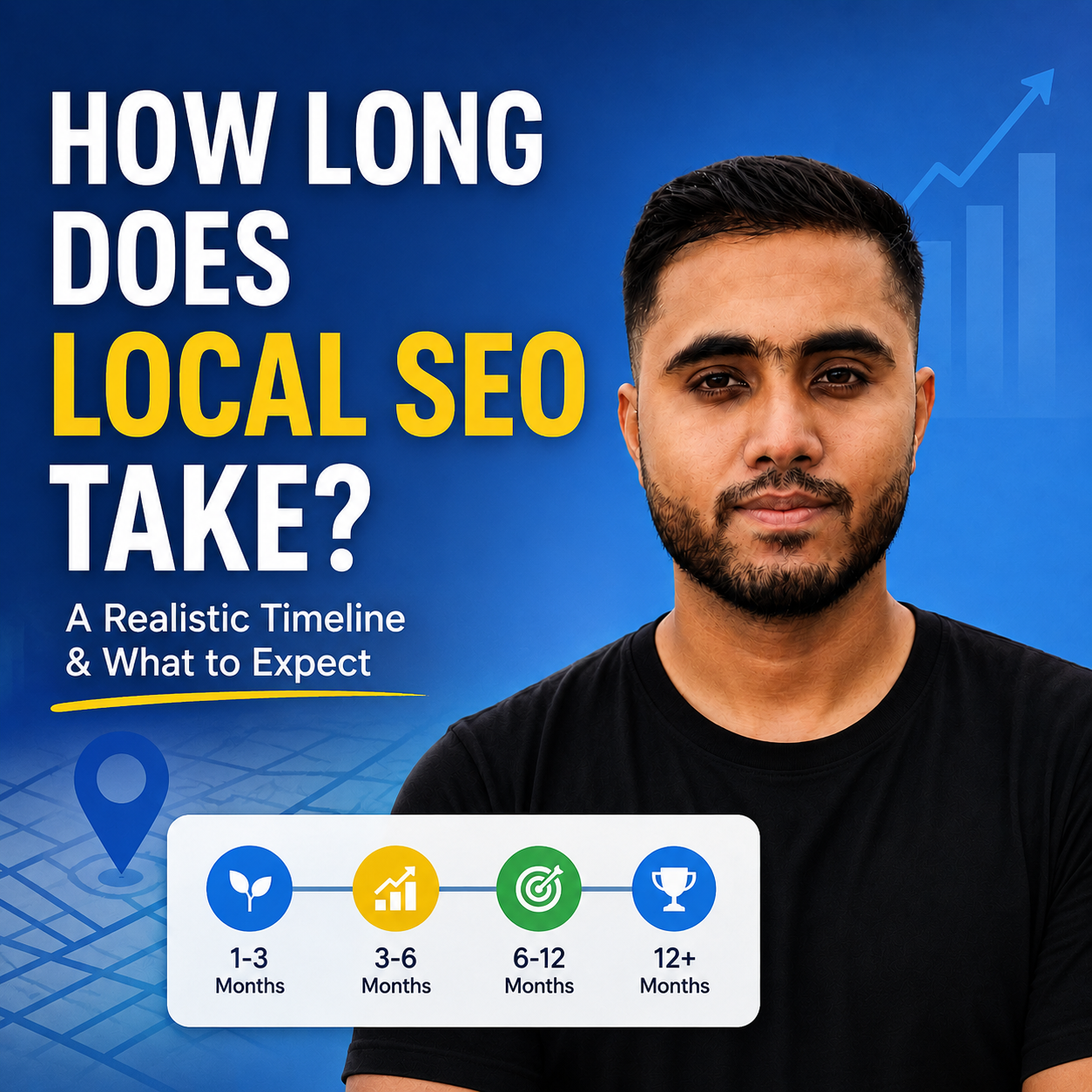
Local SEO usually takes 3 to 6 months to show clear ranking movement for a small business. In easier markets, you may see early improvements within a few weeks. In more competitive service areas, it can take 6 to 12 months or longer to rank strongly on Google Maps, organic search results, and AI-powered answers.
The honest answer is this: how long local SEO takes depends on your current online presence, competition, website quality, Google Business Profile, reviews, content, and consistency. A small business with a clean website, strong reviews, and accurate listings can move faster than a business starting from zero.
| Local SEO Stage | Timeline | What Happens |
|---|---|---|
| SEO audit and setup | Month 1 | Website, Google Business Profile, keywords, tracking, and local listings are reviewed |
| Early visibility signals | Months 2–3 | Google starts understanding your business, services, and local relevance |
| Ranking movement | Months 4–6 | More impressions, keyword growth, map visibility, calls, and leads may appear |
| Stronger local authority | Months 6–12+ | Better rankings, more trust, stronger content, and more consistent lead flow |
For small businesses, local SEO is not just about ranking higher. It is about being found by the right people when they are ready to call, book, visit, or request a quote. That is why Shawon Kumar Diptao focuses on building local SEO systems that connect visibility with real business growth.
What Does Ranking on Google Mean for a Small Business?
When a business owner asks, “how long does local SEO take?”, they usually mean one of three things.
The first is ranking in the Google local pack or Google Maps results. This is the map section that appears for searches like “SEO expert near me,” “local marketing consultant,” or “small business SEO services.” These searches often have high buying intent because the person is already looking for a nearby or service-area business.
The second is ranking in the normal organic search results. These are the website links below paid ads and map results. A small business can rank here with strong service pages, helpful blog content, technical SEO, and good internal linking.
The third is appearing in Google AI Overviews or answer-style results. To support this, your content needs to answer questions clearly, use structured headings, include FAQs, and explain topics in a way that sounds expert, helpful, and trustworthy.
Why Does Local SEO Take Time?
Local SEO takes time because Google has to discover, crawl, compare, and trust your business information. Google does not rank a business only because a page was published or a profile was updated. It looks at many signals together.
Your website must clearly explain what you do. Your Google Business Profile must match your services. Your reviews must show trust. Your business name, address, phone number, website, and service details should be consistent across the web. Your content must answer real customer questions. Your pages need to load properly, work on mobile, and guide visitors toward action.
That is why local SEO is a process, not a one-day task. You are not only trying to please an algorithm. You are proving to Google and potential customers that your business is relevant, active, trusted, and useful.
Main Factors That Affect How Long Local SEO Takes
Website Quality
Your website is the foundation of your local SEO strategy. If your website is slow, confusing, thin, or not mobile-friendly, rankings can take longer.
A small business website should have clear service pages, location relevance, helpful content, strong headings, optimized title tags, meta descriptions, internal links, and simple calls to action. Google and users should quickly understand who you help, what you offer, and why you are trustworthy.
For example, one broad “Services” page is usually not enough. A marketing business may need separate pages for local SEO, SEO audits, Google Business Profile optimization, content strategy, analytics setup, and conversion tracking.
Google Business Profile Optimization
Your Google Business Profile is one of the most important parts of local SEO. It helps your business appear in Google Maps and local search results.
A complete profile should include the right business category, business description, services, photos, hours, website link, service area, updates, and review responses. If your profile is incomplete or uses weak service information, Google may not fully understand when to show your business.
For small businesses, this can make a major difference. A well-optimized profile can help increase calls, direction requests, website visits, and local trust.
Reviews and Reputation
Reviews help customers decide whether they should trust you. They also support local visibility because they show that real people have used your business.
A business with fresh, detailed, positive reviews often has an advantage over competitors with few or outdated reviews. Reviews that mention your services naturally can also help reinforce relevance.
You should not buy fake reviews or pressure customers. Instead, create a simple review process. Ask happy clients for honest feedback after a successful project, sale, or service experience.
Local Competition
Competition has a big impact on how long local SEO takes. If your competitors have strong websites, hundreds of reviews, active content, and quality backlinks, it will take longer to catch them.
But if your market is less competitive, or your competitors have weak SEO, you may see results faster. This is why every local SEO plan should begin with competitor research. You need to know who is ranking, why they are ranking, and what gaps you can use.
Content Depth and Search Intent
Helpful content helps Google understand your expertise. It also helps customers trust you before they contact you.
For example, a blog post like this supports the keyword how long does local SEO take, but it also supports related keywords such as local SEO timeline, local SEO for small business, rank on Google, Google Business Profile optimization, local search rankings, and small business SEO strategy.
The goal is not to stuff keywords. The goal is to answer the full question better than your competitors.
Internal Linking
Internal links help connect your blog posts, service pages, and main website pages. They guide users to the next step and help Google understand which pages are important.
For example, a blog post about local SEO timelines should naturally link to a service page or homepage using anchor text such as local SEO consultant for small businesses. This helps turn informational traffic into possible leads.
Local SEO Timeline by Month
Month 1: Audit, Research, and Setup
The first month is about building the base. This includes checking your website, Google Business Profile, keywords, competitors, local listings, analytics, Search Console, technical SEO, and content gaps.
This stage may not create instant ranking jumps, but it is necessary. Without a clean foundation, later SEO work can become slow and messy.
Important tasks in month one include:
- Local keyword research
- Google Business Profile review
- Website SEO audit
- Competitor research
- Tracking setup
- Citation and listing checks
- Service page planning
- Technical issue fixes
Months 2–3: Google Starts Understanding Your Business
During months two and three, Google may begin picking up stronger signals from your website, content, profile, and citations. You may see more impressions in Google Search Console. Some keywords may start appearing on lower pages of Google.
This is also when you should begin publishing helpful content and improving existing pages. Your Google Business Profile should stay active with photos, posts, services, and review responses.
At this stage, the goal is not always top rankings yet. The goal is momentum.
Months 4–6: Ranking Movement and Lead Growth
Months four to six are where many small businesses begin seeing clearer movement. Long-tail keywords may start ranking. Service pages may gain more visibility. Google Maps views may increase. Calls, form submissions, and website visits may improve.
This is also when your SEO strategy should become more refined. You can review which pages are gaining traffic, which keywords are improving, and which services need more content support.
A professional local SEO strategy does not rely on guesswork. It uses data.
Months 6–12: Stronger Authority and Competitive Growth
After six months, SEO can become more powerful if the work continues. Your website may have more content, stronger internal links, more reviews, better citations, improved authority, and cleaner technical performance.
This is when harder keywords become more realistic. Competitive local SEO often requires steady effort over many months, especially if you want to rank for valuable service keywords.
How Much Does Local SEO Cost for a Small Business?
Local SEO cost depends on your goals, market, competition, website condition, and how much work is needed. A simple local SEO setup may cost less, while a full monthly strategy with content, technical SEO, Google Business Profile management, reporting, and conversion tracking will cost more.
Cheap SEO can be risky because it often skips important work. It may use thin content, poor backlinks, copied location pages, or weak reporting. These shortcuts can delay results or damage trust.
A better local SEO investment should include:
- Keyword and competitor research
- Website optimization
- Google Business Profile improvement
- Local content creation
- Technical SEO fixes
- Review strategy
- Internal linking
- Analytics and conversion tracking
- Monthly performance reporting
For small businesses, the real question is not only “What does local SEO cost?” The better question is, “Will this SEO work help us rank, earn trust, and generate leads?”
GEO Strategy: How Local SEO Changes by Service Area
Even when you do not target one specific city in the blog title, your local SEO strategy should still match your real service area.
If your small business serves one main area, your website should send clear local signals around that market. Your homepage, service pages, reviews, Google Business Profile, and content should all support the same location focus.
If your business serves multiple nearby areas, you may need dedicated location pages or service-area sections. These pages should not be copied and pasted with only the location name changed. Each page should include useful details, local customer needs, service examples, FAQs, and proof that you understand that area.
A strong GEO-focused SEO strategy uses real local context. That can include customer examples, common local problems, seasonal demand, service-area notes, review mentions, project photos, and location-specific FAQs.
Local SEO Maintenance Tips
Local SEO needs ongoing maintenance. A business that optimizes once and then stops may lose momentum.
Keep your Google Business Profile updated. Add new photos. Respond to reviews. Publish helpful blog content. Refresh old service pages. Fix broken links. Check page speed. Watch Search Console for indexing issues. Make sure your contact details stay consistent across the web.
You should also track real business actions, not only rankings. Calls, form submissions, bookings, clicks, and conversions matter more than vanity metrics.
This is one area where Shawon Kumar Diptao can help small businesses connect SEO with analytics. With GA4, Google Ads conversion tracking, Facebook Pixel setup, and Microsoft Clarity, you can understand what visitors do after they land on your website.
When to Call a Professional for Local SEO
You should call a local SEO professional when your rankings are stuck, your competitors keep appearing above you, your website gets visits but no leads, or your Google Business Profile is not generating calls.
You should also get professional help if you are unsure whether the problem is technical SEO, weak content, poor reviews, bad citations, slow website speed, or low authority.
Local SEO has many moving parts. Guessing can waste months. A professional can identify what matters first and build a step-by-step plan.
If your business depends on local leads, professional SEO support can help you avoid random tactics and focus on work that supports rankings, trust, and conversions.
Why Choose Shawon Kumar Diptao for Local SEO?
Shawon Kumar Diptao helps small businesses improve local visibility with practical SEO and marketing strategies. The focus is not only ranking for keywords. The focus is helping your business get found, earn trust, and turn visitors into leads.
A strong local SEO strategy should connect content, technical SEO, Google Business Profile optimization, internal links, analytics, and conversion tracking. When these pieces work together, your business has a better chance of ranking on Google and attracting qualified customers.
With Shawon Kumar Diptao, small businesses can get support for local SEO planning, website optimization, SEO content, tracking setup, and performance improvement. That means you are not only publishing content. You are building a local search system.
Start Improving Your Local SEO Rankings
So, how long does local SEO take? For most small businesses, expect 3 to 6 months for meaningful progress and 6 to 12 months or more for stronger competitive rankings.
The sooner you fix your foundation, the sooner Google can understand and trust your business. Start with your website, Google Business Profile, reviews, local content, citations, and tracking.
Work with Shawon Kumar Diptao to build a smarter local SEO strategy that supports your rankings, traffic, and leads.
Local SEO FAQs
How long does local SEO take for a small business?
Local SEO usually takes 3 to 6 months to show clear ranking movement. Competitive markets can take 6 to 12 months or longer depending on your website, reviews, Google Business Profile, content, citations, and competition.
Can local SEO work in the first month?
Yes, some early improvements can happen in the first month, especially after fixing major issues. However, strong rankings usually take longer because Google needs time to crawl, compare, and trust your business signals.
Why is my small business not ranking on Google?
Your business may not rank because your website is weak, your Google Business Profile is incomplete, your reviews are low, your citations are inconsistent, or your competitors have stronger local SEO signals.
Is local SEO better than paid ads?
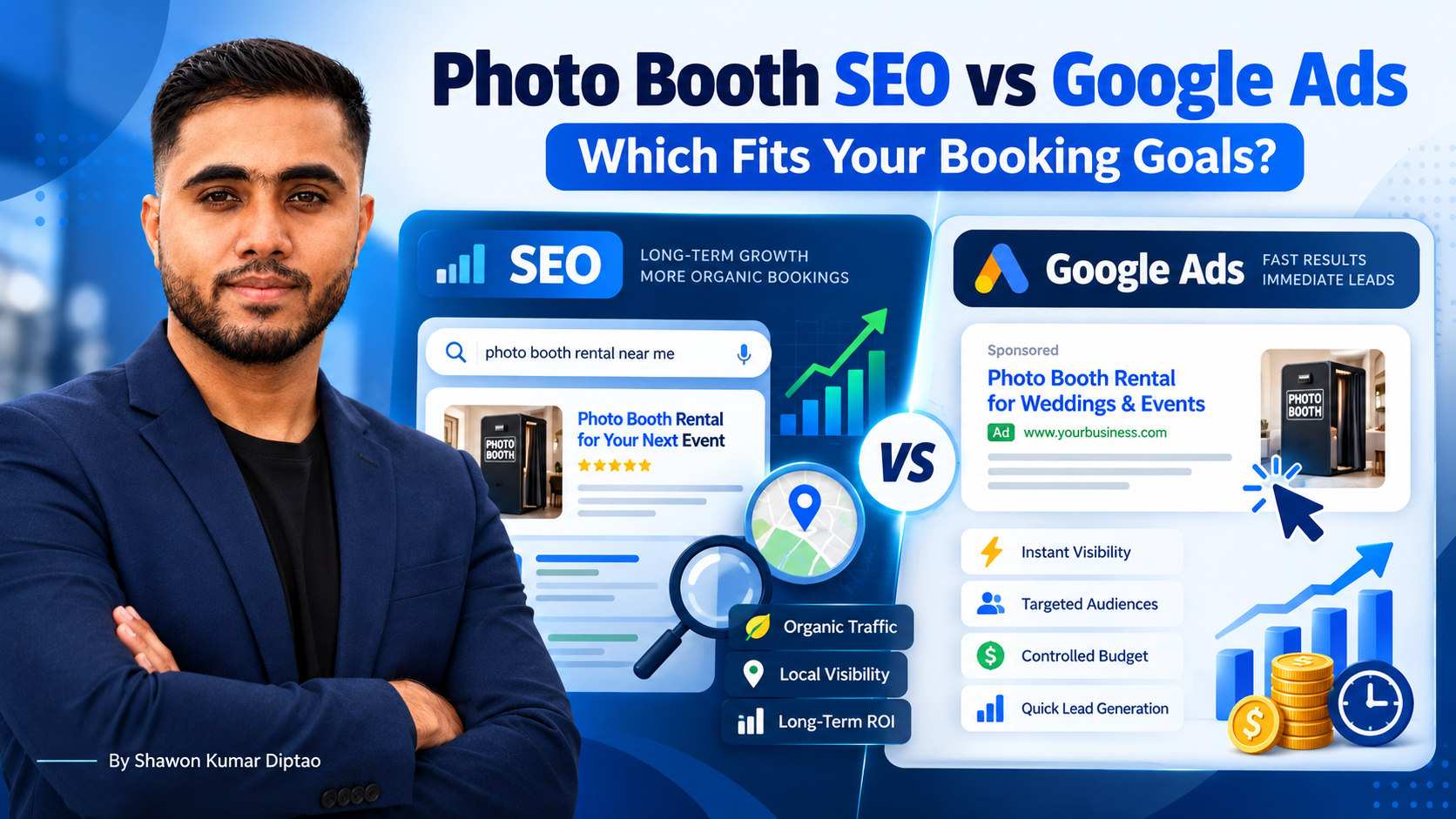
Local SEO and paid ads work differently. Paid ads can bring faster traffic, while local SEO builds long-term visibility. Many small businesses get the best results by using SEO for long-term growth and ads for faster lead generation.
How can I make local SEO work faster?
You can speed up progress by fixing technical issues, optimizing your Google Business Profile, improving service pages, publishing helpful content, building reviews, cleaning up citations, and adding strong internal links to important pages.